
You have a 40ft container order for striking-cap stainless steel putty knives. A Chinese trading company promises '30 days' but can't show you where the product is made. Trumax, a direct Zhejiang manufacturer, gives you a clear timeline from sample approval to FOB Shanghai—but is it fast enough? Here’s why that question is the wrong one to ask.
Why 'Lead Time from Sample Approval to FOB Shanghai' is More Than a Number in China Manufacturing
The lead time a buyer hears from a China supplier is often a single digit stripped of the production steps that can turn a 30‑day shipment into a 60‑day dispute. When you source striking-cap stainless steel putty knives at container volume, the timeline isn’t just stamping and assembly—it includes in‑house grinding to achieve consistent blade flexibility, TPR overmolding for the hammer‑end grip, pull‑out testing of the striking caps, and container consolidation at our Shanghai export office. A trading company’s phone‑quote rarely accounts for these variables because the production happens in workshops they don’t control.
To help enterprise buyers evaluate a real 40ft container order, we’ve broken down the key differences between a direct Zhejiang factory and a typical Chinese trading company when it comes to lead time and the process behind it.
| Factor | Direct Zhejiang Manufacturer (Trumax) | Chinese Trading Company |
|---|---|---|
| Production Process Visibility | In‑house stamping, grinding, TPR overmolding, and assembly run on shared production lines at our Zhejiang base. Milestones are logged and traceable. | Multiple outsourced workshops handle sub‑processes; supplier often cannot verify real‑time status of each batch. |
| QC Audit Access | Buyers can perform third‑party inspections directly on our floor during production, with full access to hardness testers, pull‑out test rigs, and packaging stations. | Inspections are often limited to a “showroom” or final stage; the actual stamping and grinding are hidden. |
| Lead Time Reliability | Typical 25–35 calendar days from sample approval to FOB Shanghai, driven by internal scheduling and capacity, with milestone confirmations for stamping, overmolding, and final QC. | Often promises faster delivery, but unverified processes cause sudden delays, rework, or material substitutions that push the shipment date. |
| Hidden Delay Risks | Our in‑house processes flag issues early: a cap pull‑out test failure is caught during production, not at the dockside inspection, preventing last‑minute rejections. | Problems emerge only at final inspection, leading to costly re‑negotiations, air‑freight penalties, or container re‑packaging. |
| Container Consolidation | As the factory, we load our own container at the Zhejiang plant, manage export documentation, and truck directly to Shanghai port—no middleman consolidation yards. | Traders collect goods from multiple factories, which adds handling and timing uncertainty; a delay from one sub‑supplier cascades to the whole container. |
| Post‑Shipment Recourse | Direct relationship with the manufacturer; re‑order consistency and remedial action are negotiated with the same engineering team that built the first batch. | If the workshop changes between orders, the buyer may unknowingly receive a different blade grind, hardness, or cap design with no recourse to the original producer. |
How Our Zhejiang Factory Delivers a 40ft Container of Striking-Cap Putty Knives from Sample Approval to FOB Shanghai
Step 1: Sample Approval Kick‑starts the Clock
Once your pre‑production sample of a striking‑cap stainless steel putty knife—complete with your chosen grip colour, blade stiffness, and cap design—is signed off, our Zhejiang production team locks the batch ticket. The 25–35 day window begins from that formal approval, not from receipt of a PO. For custom OEM designs with new laser‑etched logos, we confirm the artwork file in parallel so that marking tooling is ready when stamping starts.
Step 2: In‑House Stamping and Precision Grinding
The blade‑blank stamping and taper grinding happen on our own lines at the Zhejiang manufacturing base. Because we control both steps, we maintain consistent HRC hardness across the entire 40ft container volume. Edge burrs are removed in‑line, reducing rework later. This in‑house integration eliminates the coordination lag of sending blanks out for grinding and waiting for return.
Step 3: TPR Overmolding and Handle Assembly
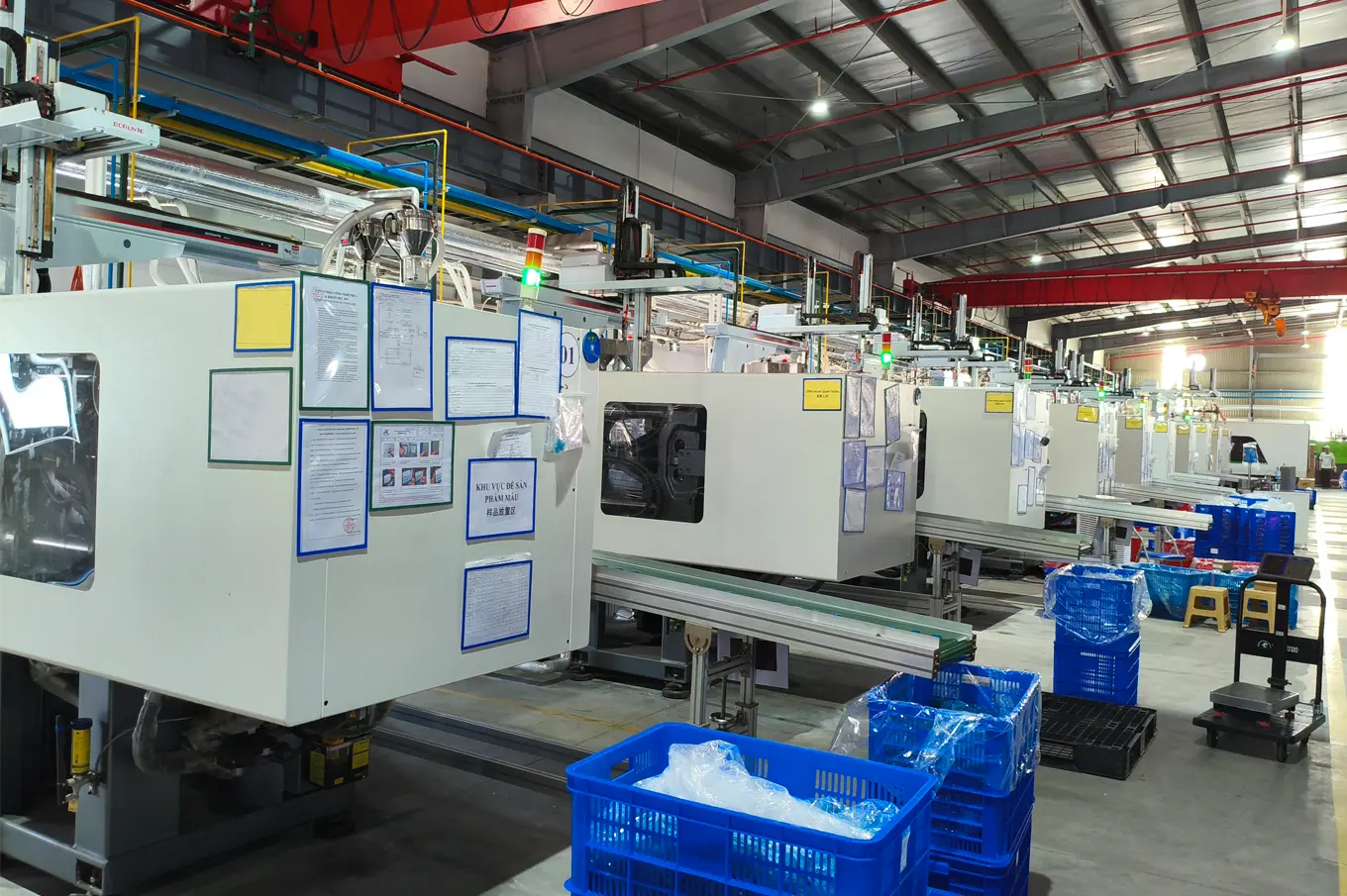
Striking‑cap putty knives require a robust overmolded TPR grip that bonds directly to the stainless steel shank and withstands hammering. Our in‑house injection molding unit runs the overmolding immediately after blade finishing, so no buffer stock sits idle. For each handle, we verify the polymer-to‑metal adhesion through destructive sampling on the first‑off pieces of the shift.
Step 4: Multi‑Point QC Inspections
Every 40ft container order goes through three QC gates: (a) post‑stamping hardness spot checks, (b) pull‑out force testing on a random sample of hammer caps, and (c) full‑blade visual inspection under
Discuss Your Manufacturing Project
Email your drawings or questions. We reply within 24 hours.
Related Products
 3 images
4-Inch Stainless Steel Taping Knife
View product 2 images
Unibody Striking Putty Knife
View product 3 images
Steel Putty Knife
View product 3 images