
You locked in a 3-year exclusive distribution agreement with 4 major EU DIY chains for your new private label line of stainless steel striking-cap putty knives, with a committed 120,000 units per year volume. You have two competing supplier quotes on the table: one from a Shanghai-based design and export firm that offers free 3D handle design but outsources all stamping and molding to 3 separate unvetted sub-factories, and one from a Zhejiang direct manufacturer that offers in-house design but requires you to audit their production floor before signing. Which choice delivers zero batch drift, zero TPR handle delamination, and zero unexpected cost overruns over the full 36-month program?
Why Split Sourcing For Custom Striking-Cap Putty Knife Handles Almost Always Fails For 3+ Year High-Volume Programs
For enterprise private label brands, the most common mistake when launching a custom hand tool line is siloing design, blade production, and injection molding across 3 unrelated vendors. No single party has full accountability for the end product, and the most frequent failures show up 6+ months into the program, long after you have paid for tooling and placed your first 2 container orders. We have seen EU brands lose 7% of their total program margin to unexpected returns from TPR handles delaminating from the blade tang, another 5% to rework for handles with sink marks that break their premium brand aesthetic, and 3% to striking caps that pull out of the handle under normal job site use. None of these failures show up in initial 10-unit sample batches, because small runs do not replicate the stress of 100k+ unit mass production.
| Evaluation Criteria | Direct In-House Process (Trumax) | Typical Split Sourcing (Design + Multiple Subcontractors) |
|---|---|---|
| 3D Design Alignment | Optimized for in-house stamping tang tolerances, no fit gaps between blade and overmold | Design files created without access to stamping line data, leading to frequent tang seating errors |
| TPR Overmold Bond Testing | Verified across 20+ sample units before mold cutting, consistent performance across all batches | Only tested on 2-3 prototype units, no quality control protocol for long production runs |
| Batch Consistency Over 3 Years | All production steps under one roof, full traceability for every component | Subcontractor switching is common to cut costs, leading to material and dimensional drift |
| Striking Cap Pull-Out Validation | Tested per 10,000 unit batch, zero unplanned failures in 3+ year programs | No ongoing batch testing, failure rates can spike to 2% after 6 months of production |
| Total Program Cost Over 36 Months | Single fixed contract with no hidden markup, predictable FOB Shanghai pricing | 3 separate vendor invoices, frequent change order fees, no consolidated fulfillment discount |
Our Step-By-Step Process For Delivering Your 120k/Year Custom Striking-Cap Putty Knife Line
Your 3-year 120,000 unit annual volume fully qualifies for our full suite of custom design and new mold opening support, as it meets our standard 100k+ units per year threshold for dedicated tooling investment. Our Shanghai export office does not operate as a standalone design or export agency — all 3D design and production planning is tied directly to our Zhejiang manufacturing base, to eliminate the split sourcing risks outlined above.
Step 1: 3D Design Support Embedded With Our Production Engineering Team
Your custom TPR handle design work is completed by our in-house engineering team at the Zhejiang facility, not a third-party design studio. Every iteration of your 3D file is tested against our existing stamping die tolerances for striking-cap putty knife tangs, so you will never receive a prototype where the blade does not seat fully inside the overmold. We also build in ergonomic adjustments specific to EU construction worker hand sizes, based on data from 12+ years of supplying hand tool brands across the region.
Step 2: Pre-Production Validation Before Any Mold Steel Is Cut
Once you sign off on the final 3D design, we print functional test prototypes, run full ergonomic trials, and complete preliminary pull-out strength testing for both the TPR handle and the metal striking cap before we begin machining the new mold. This eliminates 99% of costly rework that would otherwise show up after tooling is already completed.
Step 3: Unified Production Of All Components Under One Roof
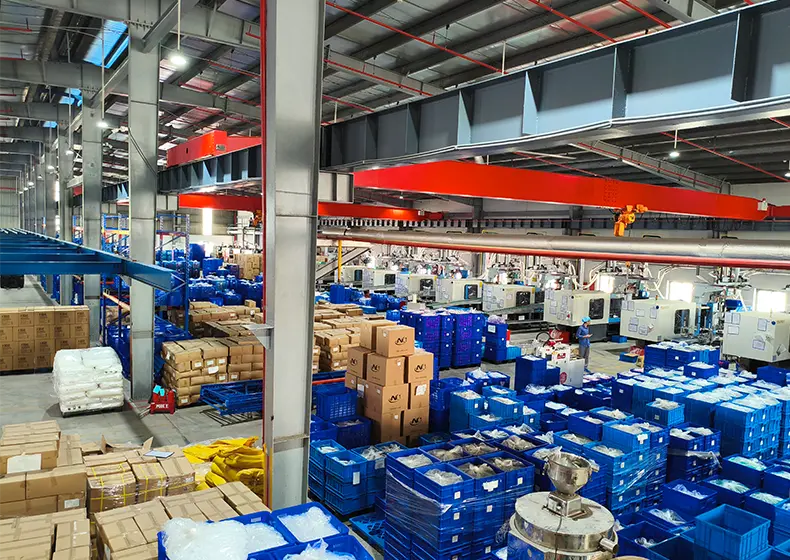
All stainless steel stamping, precision taper grinding, striking cap installation, and TPR/TPE overmolding work for your custom line is completed on our Zhejiang factory floor, no outside subcontractors are used at any stage of the 3-year program. Every batch of blades is tested for consistent hardness via our in-house testing protocols, and every overmold run is sampled for bond strength to prevent delamination.
Step 4: Factory-Integrated Fulfillment Coordinated Through Our Shanghai Office
Once each production run is complete, our Shanghai export team handles all container consolidation, full customs documentation, and FOB Shanghai delivery exclusively for our own factory output. There is no third-party export agency markup, and you will receive a single unified invoice for all production and fulfillment services, no separate charges from multiple vendors.
The Hidden 150k Unit Drift Risk No 3D Design Firm Will Warn You About
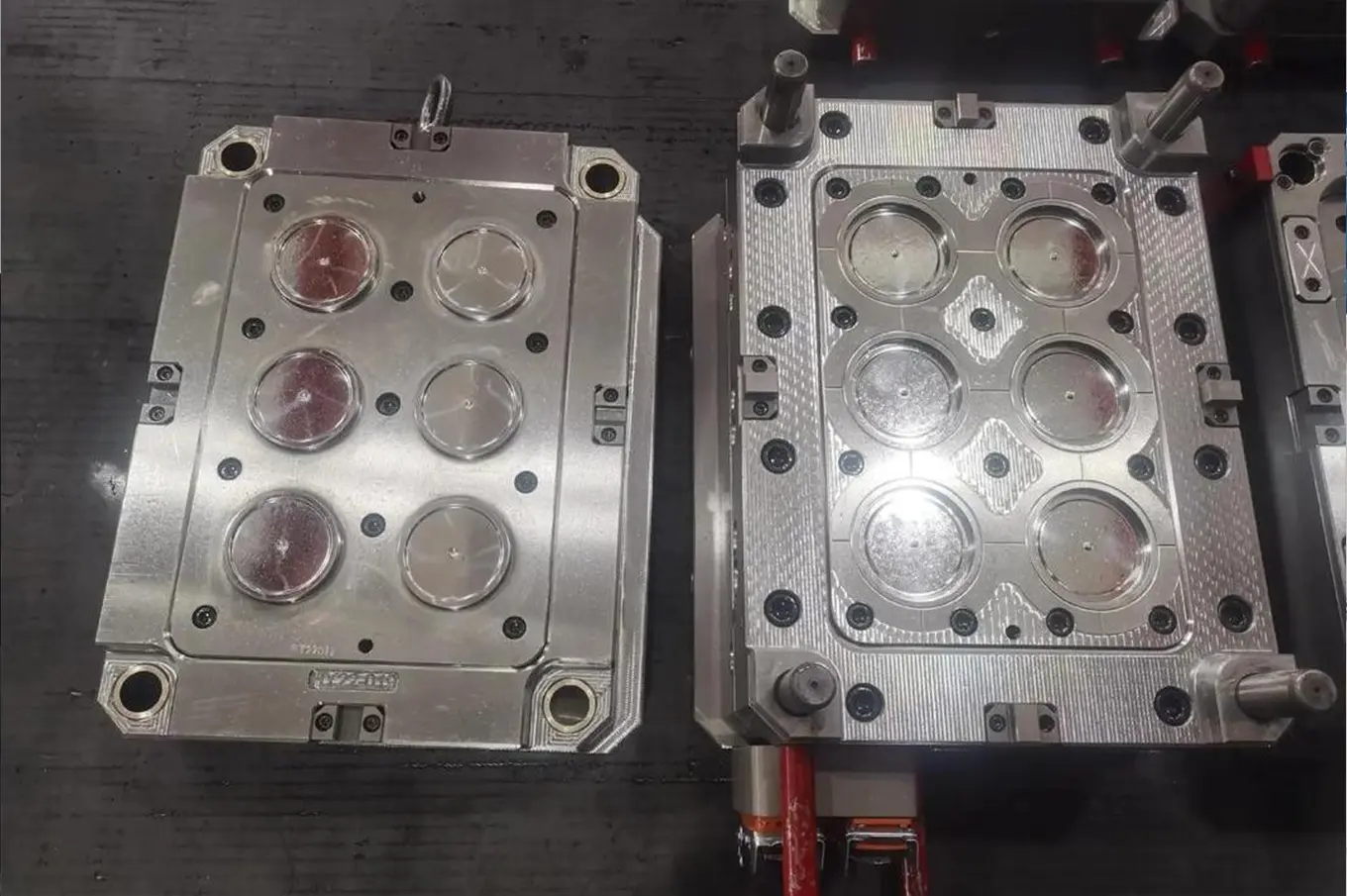
Almost no independent 3D design teams account for the gradual, almost invisible mold cavity wear that accumulates over 150,000+ overmolding shots during high-volume production. Over your full **3-year 360,000 total unit program**, that subtle dimensional drift in the TPR grip can make the handle feel loose in the user’s hand, even if every unit passes initial QC checks. Most subcontractor molding shops do not track cavity wear on a scheduled basis, so this drift will not be caught until end-users start reporting complaints. Our in-house mold maintenance team runs **scheduled cavity inspections every 25,000 shots**, with documented wear logs that we share with your supply chain team for every production run. We also calibrate our stamping tang dies on the same 25,000 shot schedule, so the metal insert that goes into the overmold never drifts out of tolerance, eliminating delamination risk entirely. We also test **striking cap pull-out strength** on a random sample of 20 units from every 10,000 unit batch, to ensure no drop in performance even as your program scales.
3 Next Steps To Lock In Your 3-Year Program This Quarter
- Request a full digital access pass to our Zhejiang manufacturing base, so your engineering team can walk the stamping, grinding, and overmolding floors virtually before scheduling an in-person audit.
- Order a free sample kit of our standard striking-cap putty knives, so your team can validate our baseline blade flexibility, striking cap performance, and TPR bonding quality before moving to custom design.
- Schedule a 30-minute sync between your product design team and our Zhejiang in-house 3D engineering team to review your initial custom handle sketches and confirm no design changes are needed to optimize for high-volume mass production.
Discuss Your Manufacturing Project
Email your drawings or questions. We reply within 24 hours.