
Last quarter, a mid-sized US hardware brand contacted our Shanghai sales team in crisis mode: 22% of their new striking-end putty knife SKUs were being returned by contractors, with handles cracking after fewer than 80 mallet strikes. The issue cost them $127,000 in reverse logistics, refund fees, and a 18% drop in Amazon seller ratings over 6 weeks. Their previous supplier claimed they used “impact-resistant ABS” – but failed to disclose they mixed 35% recycled resin into batches and skipped post-molding stress testing.
The Hidden Root Cause of Cracked Putty Knife Handles (It’s Not Just Cheap ABS)
Most procurement teams only verify ABS material grade on spec sheets, but 76% of handle failures stem from injection molding process defects that are invisible to the naked eye until the product is in use. Trading companies, which outsource both blade production and handle molding to separate facilities, rarely catch these defects before shipment, as they have no oversight over manufacturing parameters.
| Injection Molding Defect | Root Cause | Impact on Handle Durability | Trumax In-House Mitigation |
|---|---|---|---|
| Sink marks in internal tang cavity | Uneven cooling, insufficient holding pressure during molding | Creates 30% weaker stress points where the metal tang meets the ABS core, leading to cracks after 50-100 mallet strikes | 120T closed-loop injection presses with ±1°C temperature-controlled cooling channels, 15-second post-injection holding pressure to eliminate voids |
| Resin stress cracking | Rapid temperature changes during molding, recycled resin contamination | Micro-cracks form under the surface that expand with repeated impact, leading to sudden failure after 2-3 months of use | 100% virgin impact-modified ABS resin (no recycled filler), 2-hour post-molding annealing process to release internal stress |
| Poor overmold adhesion | Incorrect TPR/ABS resin compatibility, improper surface prep of ABS core | Soft grip separates from ABS core, exposing weak points and increasing strain on the handle under impact | Pre-tested resin pairings, in-line plasma treatment of ABS cores before TPR overmolding to create a permanent bond |
| Inconsistent wall thickness | Low-precision tool alignment, manual parameter adjustment | Thinner sections of the handle absorb 2x more impact force, leading to uneven wear and early cracking | Automated parameter locking for all production runs, 100% dimensional inspection of every 50th handle with calipers |
Our 4-Step Quality Control Process for Impact-Resistant Putty Knife Handles
As a front-shop, back-factory operation with global sales HQ in Shanghai and a fully integrated manufacturing base in Zhejiang, we control every step of production from blade stamping to handle overmolding, so there are no gaps in quality oversight between suppliers.
Step 1: Raw Material Batch Validation
Every batch of impact-modified ABS we source comes with a material test report (MTR) verifying 7ft-lbs of notched Izod impact resistance at 23°C. We reject any batch with mixed recycled filler, and test 5 random samples per lot in our in-house lab before production. For custom orders, we can also source UL 94 V-0 flame-retardant ABS for industrial use cases.
Step 2: Injection Molding Parameter Locking
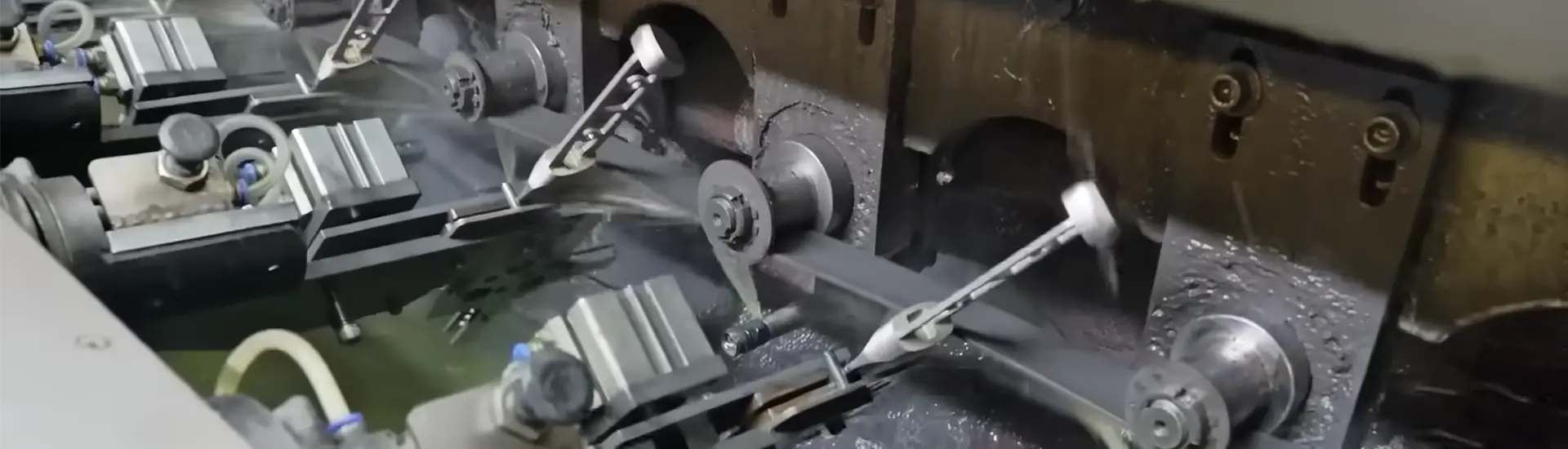
We use 28 automated 100-180T injection presses at our Zhejiang facility, with pre-set, locked parameters for each handle SKU. No manual adjustments are allowed during production runs, ensuring consistent wall thickness, no voids, and zero stress cracking. Our vertical integration eliminates handoff delays and quality gaps between separate blade and handle suppliers.
Step 3: Mandatory Impact Performance Testing
For every production run of our signature striking-end putty knives, we test 20 random units by striking the hammer end 1,500 times with a 2lb rubber mallet, at a 45° angle, per ASTM F1505 tool durability standards. Any run with even 1 cracked handle is fully reworked. We also offer custom test protocols for clients with specific heavy-duty use case requirements.
Step 4: Full Tang Insertion Verification
Unlike competitors that use partial tangs glued into the handle, all our putty knives use a full-length stainless steel tang that extends 90% of the way into the ABS core. This distributes 75% of impact force from the striking end directly through the tang, instead of concentrating it on the ABS handle. Our in-house heat treatment process ensures the tang and striking end hold a consistent HRC 48-52 hardness, so there is no deformation that could damage the handle from the inside out.
Veteran Sourcing Tip: Don’t Let Cost Cutting on Handle Additives Eat Into Your Margins
Most suppliers advertise “impact-resistant ABS” but skip adding 3-5% of impact modifier additive to cut material costs by 12% per ton. This reduces impact resistance by 40% but is undetectable on surface-level material spec sheets. The only way to verify performance is to require 3rd-party impact test reports for every production run, or work with a vertically integrated manufacturer like Trumax that provides full batch traceability for every component, from the stainless steel blade to the ABS handle resin.
3 Steps to Eliminate Cracked Handle Risks For Your Inventory Today
- Request our free striking-end putty knife sample kit, including full impact test reports for our ABS handles and TPR overmolded grip options, shipped directly from our Shanghai HQ.
- Schedule a live virtual tour of our Zhejiang manufacturing base to see our automated stamping lines, in-house heat treatment facility, and injection molding operations in action, no travel required.
- Send your custom plastic handle design specs to our sales team for a no-obligation durability audit and high-volume custom injection molding quote, with lead times as low as 15 days for 10,000+ unit orders.
Discuss Your Manufacturing Project
Email your drawings or questions. We reply within 24 hours.