
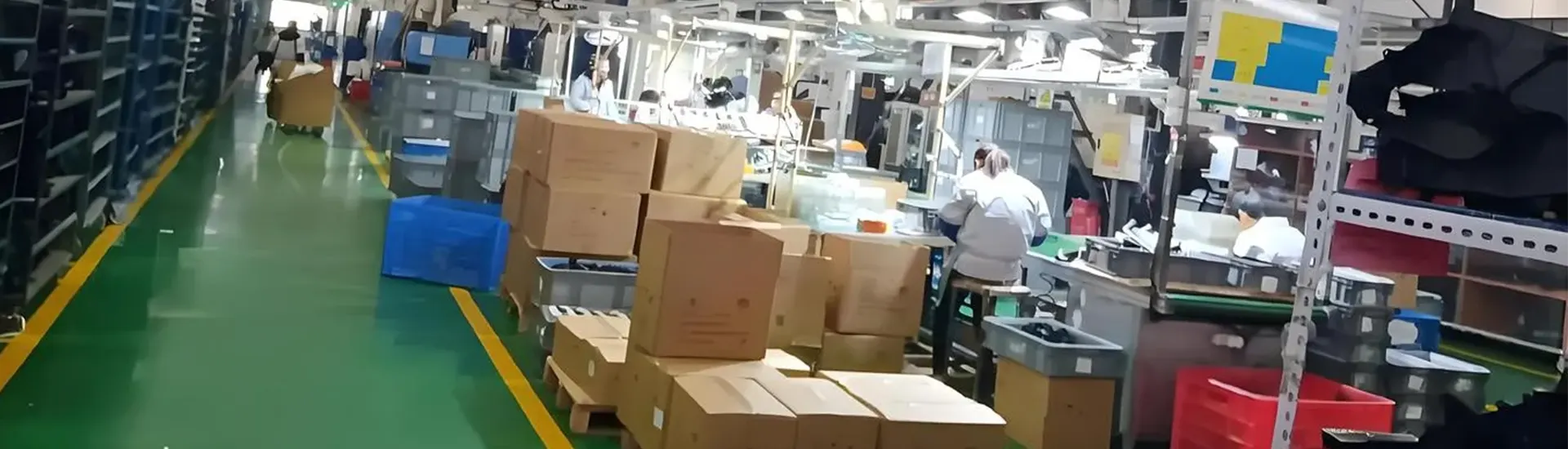
Many garden tool brand buyers split production of garden tool plastic handle assemblies across three separate vendors: one for the hard plastic core, one for metal shaft inserts, and a third for standalone TPE grip sleeves, then perform final manual assembly in their destination market. This approach almost always creates avoidable quality failures: teams regularly discover 10%+ of units fail insert pull-out tests after 3 months of outdoor use, or the TPE overmold delaminates from the hard plastic core after repeated exposure to wet hands, temperature swings and grass debris. The direct answer to your question is that a properly qualified China injection molding factory with integrated insert molding and TPE overmolding capacity can eliminate nearly all of these issues, by controlling every critical interface in a single connected workflow rather than across disconnected supply chain partners.
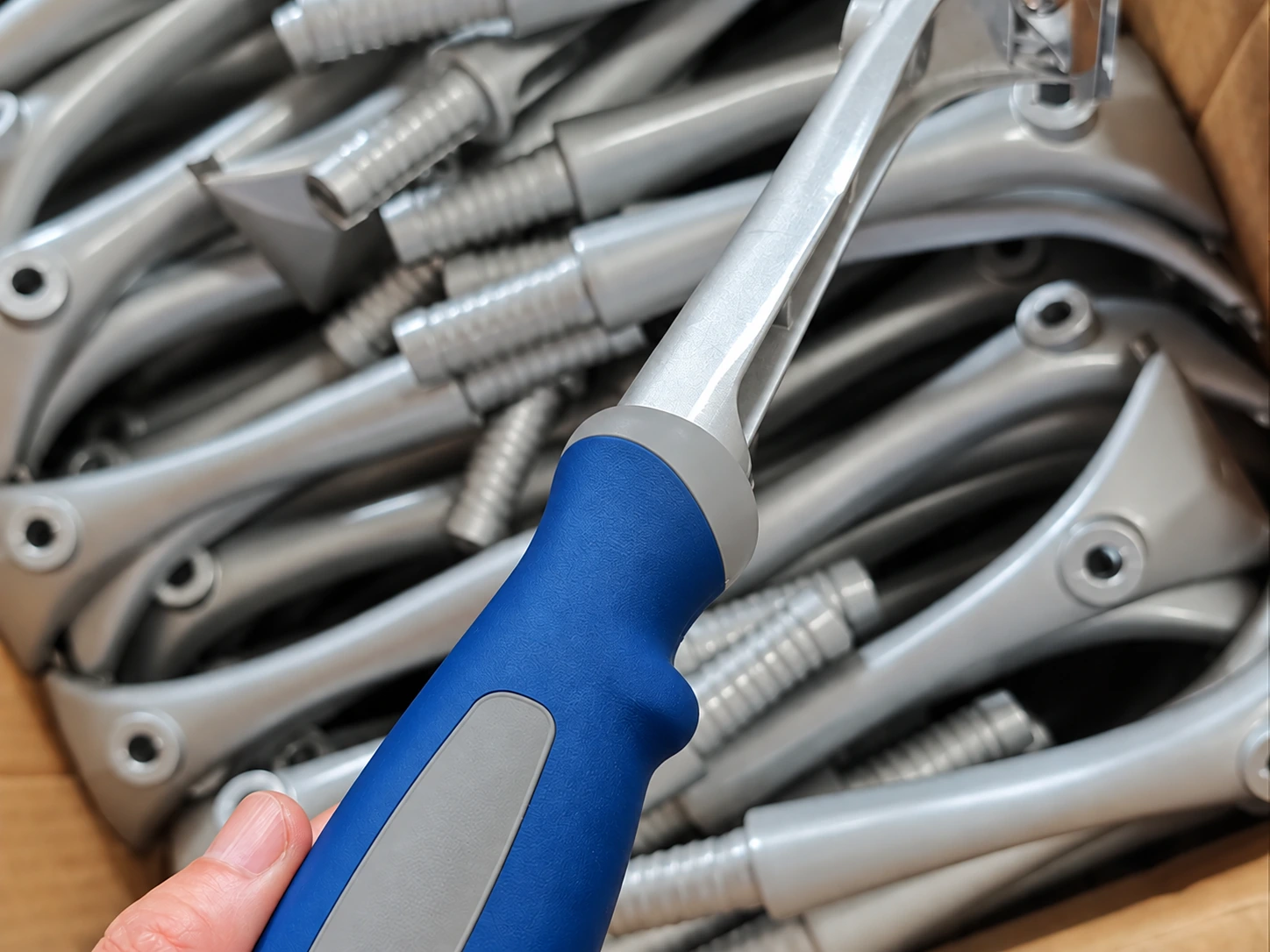
Why Combined Insert + TPE Overmolding for Garden Tool Plastic Handle Assemblies Fails at Unqualified Factories
Most generalist injection molders treat insert placement as a trivial secondary step and TPE overmolding as a basic coating operation, but garden tool plastic handle assemblies have three overlapping, interdependent interfaces that all require coordinated validation: the metal insert to hard plastic core bond, the hard plastic core to TPE overmold adhesion, and the exterior grip geometry built for wet, dirty outdoor use. Failure to evaluate these interfaces together during DFM creates defects that cannot be fixed with post-processing or minor process tuning. The table below outlines the highest priority risks specific to this component, and the checks you must require from any supplier before approving tooling:
| Interface Risk | DFM Review Requirement | Validation Gate |
|---|---|---|
| Metal shaft insert rotation under normal user torque | Insert anti-rotation feature geometry, plastic flow path around insert during molding | Torque test of first 5 off sample units |
| Metal insert pull-out during standard garden tool operation | Boss wall thickness around insert, knurl pattern on insert surface | Pull-out test against your specified load threshold |
| TPE overmold delaminates from hard plastic core | Hard plastic substrate surface texture, material compatibility, overmold melt temperature | 72 hour water soak test followed by manual peel test |
| Sink marks on visible handle surface directly behind insert | Wall thickness transition near insert mounting point, gate position adjustment | Visual check of sample under standard showroom lighting |
| Ejector marks on cosmetic grip zone | Ejector pin placement on non-critical hidden face of handle, ejection speed tuning | Compare sample to your approved cosmetic surface map |
| TPE grip texture traps dirt and grass residue | Overmold texture draft angle, no closed recesses in grip area | Cleanability test after simulated field use |
The Zhejiang engineering team at Trumax would run this full interface check during the initial DFM pass for any garden tool plastic handle assembly program, rather than waiting for sample defects to appear after tool steel has already been cut. This integrated review also avoids the common mistake of approving the hard plastic core and TPE grip as separate parts, which almost always leads to adhesion failures when the two materials are not formulated or processed to bond properly.
Executable Workflow For Integrated Insert + TPE Overmolding Production
For garden tool plastic handle assemblies that require combined insert and TPE overmolding, a structured 3-step workflow eliminates misalignment between your requirements and factory execution, and ensures every approval gate is tied to measurable performance rather than subjective visual checks.
Step 1: Align All 3 Interface Requirements Before Tooling Release
Lock these details in writing before any tool manufacturing begins, to avoid costly rework later:
- Confirm that the metal insert supply (whether you provide inserts or the factory sources them) delivers consistent knurl depth and no sharp burrs that would disrupt plastic flow during molding
- Lock in the hard plastic substrate material and TPE overmold material pairing to eliminate compatibility issues before tool design is finalized
- Mark all cosmetic zones, functional zones, and no-mark zones on a 2D surface map, so parting lines, gate vestiges and ejector marks are never placed on the user-facing grip area
- Define the minimum required pull-out and torque performance thresholds for the full assembly, matched to your specific garden tool end use, rather than using generic industry values
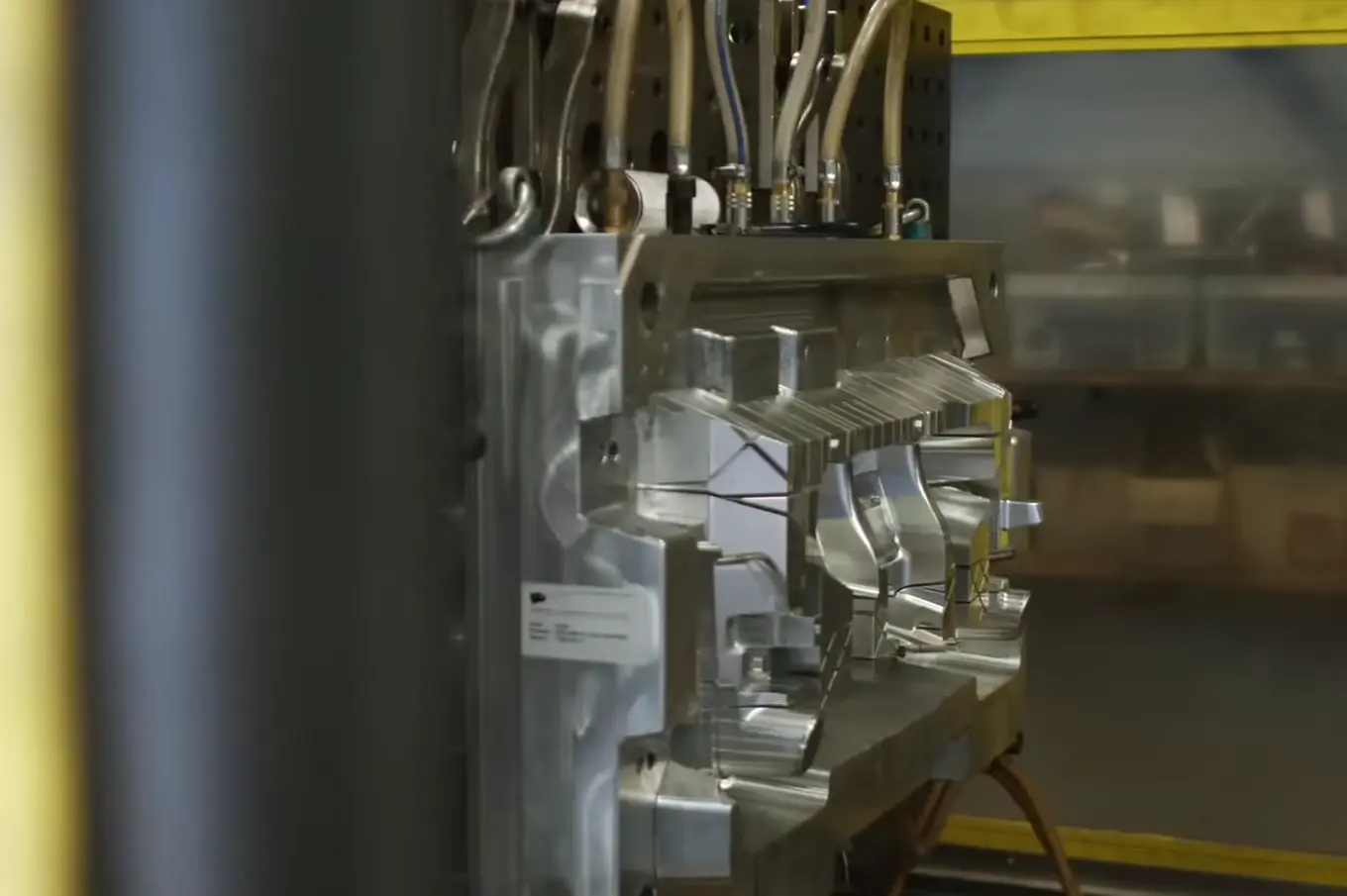
Step 2: First Article Validation Of The Full Assembly, Not Separate Components
You never approve the hard plastic handle core and TPE grip as separate parts. Every first article test must be run on the full finished garden tool plastic handle assembly, with the metal insert fully molded in. This is the only way to confirm that insert placement is centered, that the TPE has bonded evenly to the plastic core, and that no hidden defects are trapped under the overmold surface. Any factory that asks you to sign off on individual sub-components before full assembly testing is exposing you to unnecessary downstream failure risk.
Step 3: Lock Process Parameters For Repeat Batch Consistency
Garden tool products are almost always seasonal, with brands running 2-3 large production batches per year to align with spring and summer retail demand. This means process parameters for insert pre-heat temperature, hard plastic injection pressure, TPE overmold delay time, and cooling cycle all need to be stored as a controlled, unchanging record, so that a batch produced in Q1 and a batch produced in Q4 have identical grip hardness and insert retention. A suitable Trumax program would tie this parameter log directly to the inspection plan for every subsequent batch, so there is no drift between production runs separated by several months of mold storage.
Hidden Long Run Risk That Appears After 3+ Repeat Batches
The most common unforeseen defect for garden tool plastic handle assemblies with combined insert and TPE overmolding is gradual insert shift that does not appear in first article samples. After extended mold operation, the locating pin that positions the metal insert in the mold cavity wears slightly, so the insert sits off-center by a small amount, creating uneven wall thickness on one side of the plastic core. This does not cause immediate breakage, but after 6 months of outdoor use, the thin wall side cracks under normal user torque, and the handle fails. Most general mold shops do not check insert locating pin wear as part of routine preventive maintenance, so this defect slips through standard incoming quality control checks. A second hidden risk is unvetted resin lot variation: if different TPE resin batches are used across production runs, the overmold hardness and grip texture can shift noticeably, creating an inconsistent user experience that erodes your brand reputation for garden tool quality.
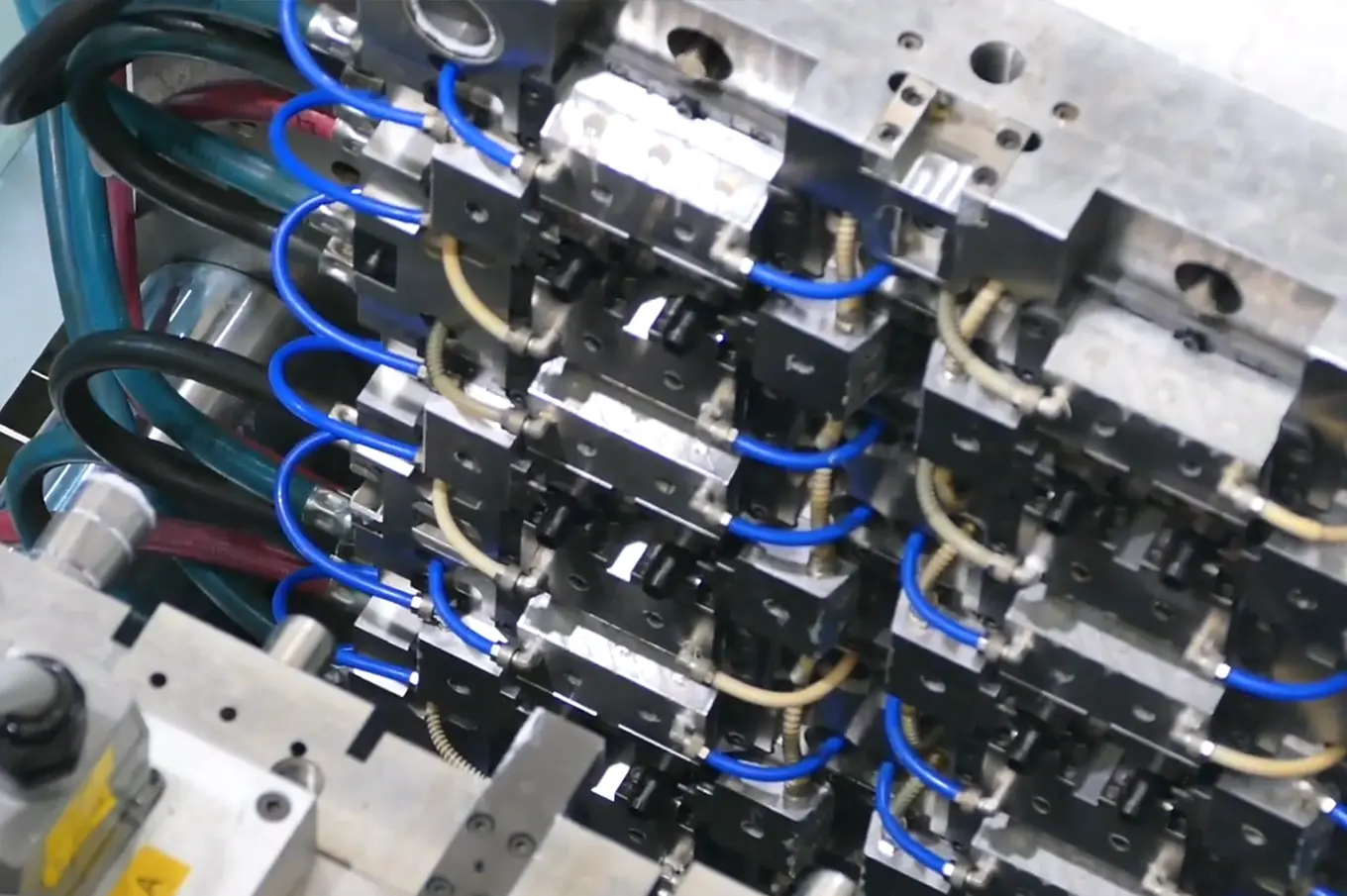
For programs that meet standard repeat production volume expectations, the Trumax Zhejiang team includes insert locating pin inspection as a mandatory pre-run check for every new batch of garden tool plastic handle assemblies, and cross-tests every incoming TPE resin lot against your approved master sample to confirm hardness and color match. The factory-integrated FOB Shanghai fulfillment workflow also ensures finished units are packed with enough cushioning to avoid compressing the soft TPE grip during long ocean transit, eliminating cosmetic deformation that can happen when overmolded parts are stacked under heavy cargo loads.
Next Steps To Advance Your Garden Tool Plastic Handle Assembly Program
- Share your 3D model, 2D drawing and existing physical sample of the full garden tool plastic handle assembly, including metal shaft insert dimensions, for a no-obligation DFM review from the Zhejiang factory engineering team
- Provide your defined performance requirements (pull-out, torque, cosmetic acceptance zones) and annual demand forecast, so the team can confirm the program fits standard repeat production parameters for combined insert and TPE overmolding
- Submit your preferred hard plastic and TPE material specifications, or share details of your garden tool end use environment, to get a material compatibility validation plan drafted before any tooling work begins
Discuss Your Manufacturing Project
Email your drawings or questions. We reply within 24 hours.